Take Control of Your Dynatrace DPS Consumption.
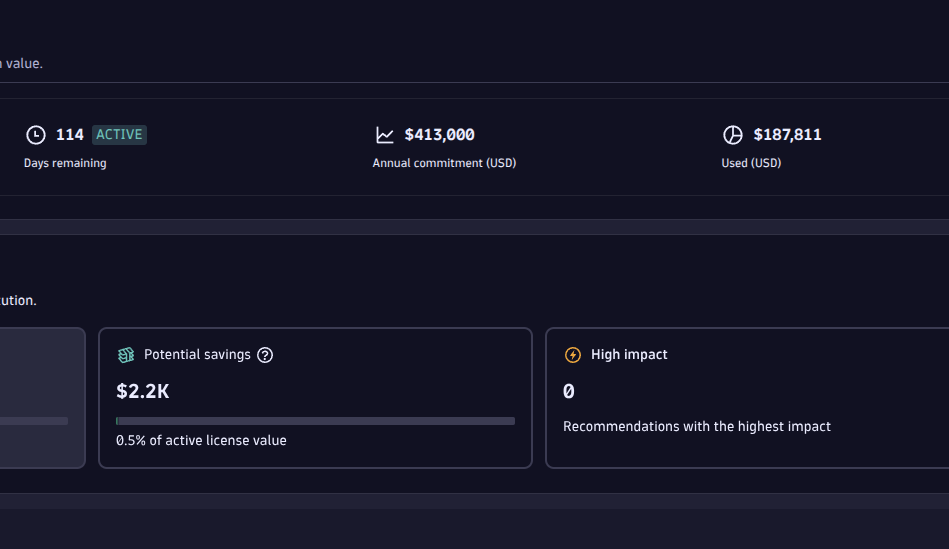
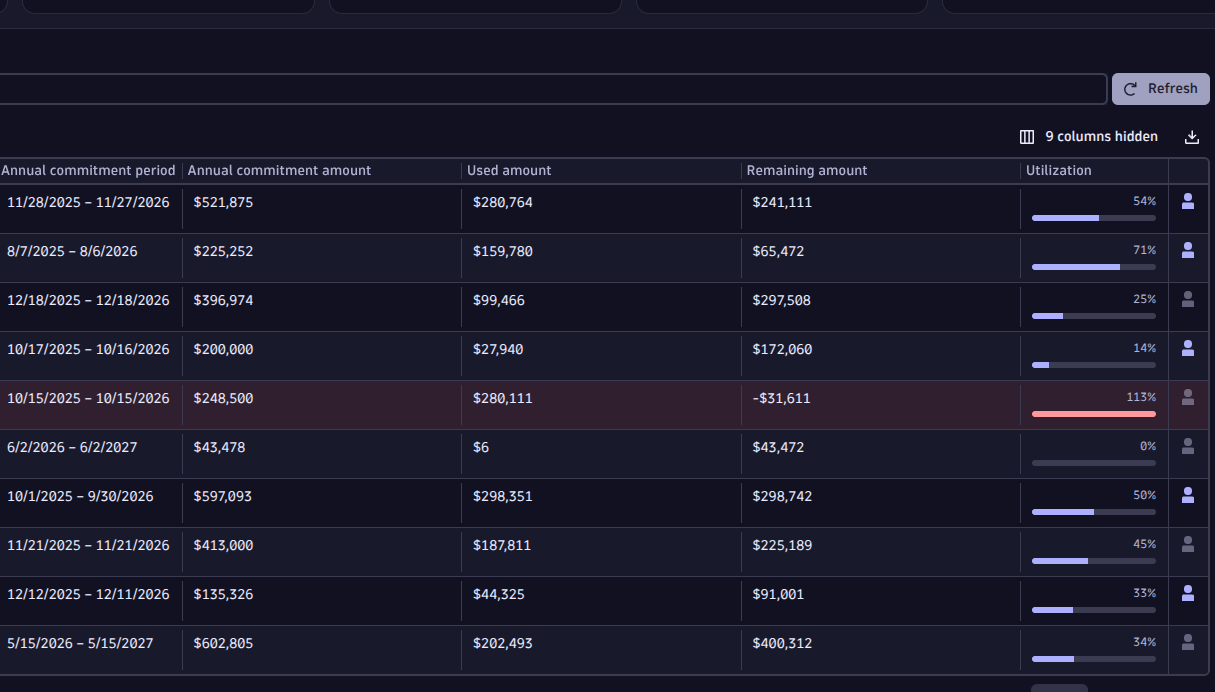
DynaLens FinOps provides Dynatrace customers with clear, actionable insights into their Dynatrace Platform Subscription (DPS) consumption.
Understand where your DPS budget is being spent, identify consumption drivers, monitor trends, and forecast future usage. With proactive insights and optimization opportunities, teams can make informed decisions, maximize the value of their investment, and avoid unexpected costs.
Purpose-built for Dynatrace DPS. Designed for visibility, predictability, and optimization.

DynaLens is developed by YourCompass.
This recognition was awarded to YourCompass for its excellence in delivering Dynatrace solutions to enterprise and government customers. DynaLens is an independently developed, proprietary product of YourCompass and is neither affiliated with nor endorsed by Dynatrace.


Watch DynaLens FinOps at work.
One view of your Dynatrace consumption position.
FinOps brings DPS usage into a structured view that helps teams understand the current state of their subscription. Depending on the customer environment, that can include views across:
Understand which areas of Dynatrace are contributing to consumption.
See how usage is distributed across internal consumers.
Connect consumption to the workloads and services using the platform.
Understand consumption across larger multi-tenant or distributed estates.
Compare trends and identify changes in usage patterns.
Make DPS consumption understandable
before it needs to be explained.
Every DPS dimension, attributed and reviewable.
FinOps reads the capability units that drive your subscription across every tenant you operate.
| Capability | Metering unit | Typical cost driver | Coverage |
|---|---|---|---|
| Full-Stack Monitoring | GiB-hour / host | Instrumented hosts × memory class | ✓ |
| Infrastructure Monitoring | GiB-hour / host | Hosts without deep-stack agent | ✓ |
| Kubernetes Operations | Pod-hour | Monitored namespaces & pods | ✓ |
| Real User Monitoring | Sessions | Web & mobile user sessions | ✓ |
| Session Replay | Sessions captured | Replay-enabled user funnels | ✓ |
| Synthetic Monitoring | Actions | Scheduled browser & HTTP checks | ✓ |
| Application Security | Scan hours | Runtime vulnerability scanning | ✓ |
| Log Management | GiB ingested + queried | Log volume + DQL queries | ✓ |
| Business Events | Events ingested | Custom domain events pushed | ✓ |
| Davis AI | GiB scanned | Problem detection + root-cause analysis | ✓ |
Instrumented hosts × memory class
Hosts without deep-stack agent
Monitored namespaces & pods
Web & mobile user sessions
Replay-enabled user funnels
Scheduled browser & HTTP checks
Runtime vulnerability scanning
Log volume + DQL queries
Custom domain events pushed
Problem detection + root-cause analysis
Representative dimensions. FinOps tracks the full DPS capability set plus custom cost-attribution overlays.
A change in consumption is only useful if teams can understand why it happened.
DynaLens FinOps helps move from “DPS usage increased.” to “What changed, where, and what is contributing to it?” Drag to reveal the analysis behind the number.
That enables teams to investigate questions such as:
See where consumption is heading.
FinOps can use current consumption and trend information to give teams earlier visibility into their expected DPS position. That allows organizations to move from retrospective reporting toward proactive management. Potential views can include: The goal is not simply to predict the invoice — it is to give the organization enough time to make a better decision.
How quickly is usage changing?
What does the current pattern imply if it continues?
Where is consumption likely to be at a future point?
How does expected consumption compare with the organization's commercial plan?
Where are teams, tenants or capabilities moving outside expected ranges?
Make consumption ownership visible.
Large Dynatrace environments often have many internal consumers but one commercial commitment. FinOps helps introduce accountability across that shared estate, using consumption views, budgets and thresholds to establish clearer operating expectations for teams and business units.
Define expected consumption boundaries.
Surface when usage approaches defined limits.
Notify the right stakeholders when consumption changes materially.
Associate consumption with the teams or services responsible for it.
Create a repeatable process for understanding and managing DPS usage.
This turns DPS from a centralized licensing concern into a shared operating responsibility.
Optimise value, not just cost.
The objective of FinOps should not be to reduce consumption at any price. Dynatrace creates value when teams use it. The better question is: are we consuming DPS intentionally, efficiently and in the areas that matter? DynaLens FinOps helps teams identify areas that may deserve review:
This allows optimisation decisions to be made with context rather than through blanket reductions.
Spend less where it adds no value.
Invest more where it does.
DPS becomes especially challenging when Dynatrace is shared.
Across multiple entities, departments, agencies or customers, central platform teams need to understand both the total position and the consumers underneath it. DynaLens FinOps can provide a clearer consumption view across those complex estates. That is particularly relevant for:
Gains visibility across the total position and every consumer underneath it.
Gain accountability for the consumption attributed to them.
Gains a clearer view of the commercial position.
Know Your Consumption. Control Your Costs. Maximize Your Value.
Gain complete visibility into your Dynatrace DPS consumption. Understand what drives usage, track trends, forecast future needs, and empower teams with clear ownership and accountability.
From consumption insights to proactive optimization.
FinOps is one of five.

Assist
AI-assisted investigation, natural-language interaction and agentic workflows.
Signal
Operational intelligence that communicates itself.
Flow
Observability intelligence connected to action.
Map
Technical telemetry connected to business context.